
Lihat juga


 24.06.2026 08:51 AM
A break for oil, but not for stocks. Brent closed at its lowest levels since the start of the Middle East war, yet that didn't stop the S&P 500 from falling. Tech stock sell-offs pulled the broad index into the red for a second day running. It seems the fragile de-escalation in the conflict is not providing very generous fuel for the US stock market.
Stock index dynamics
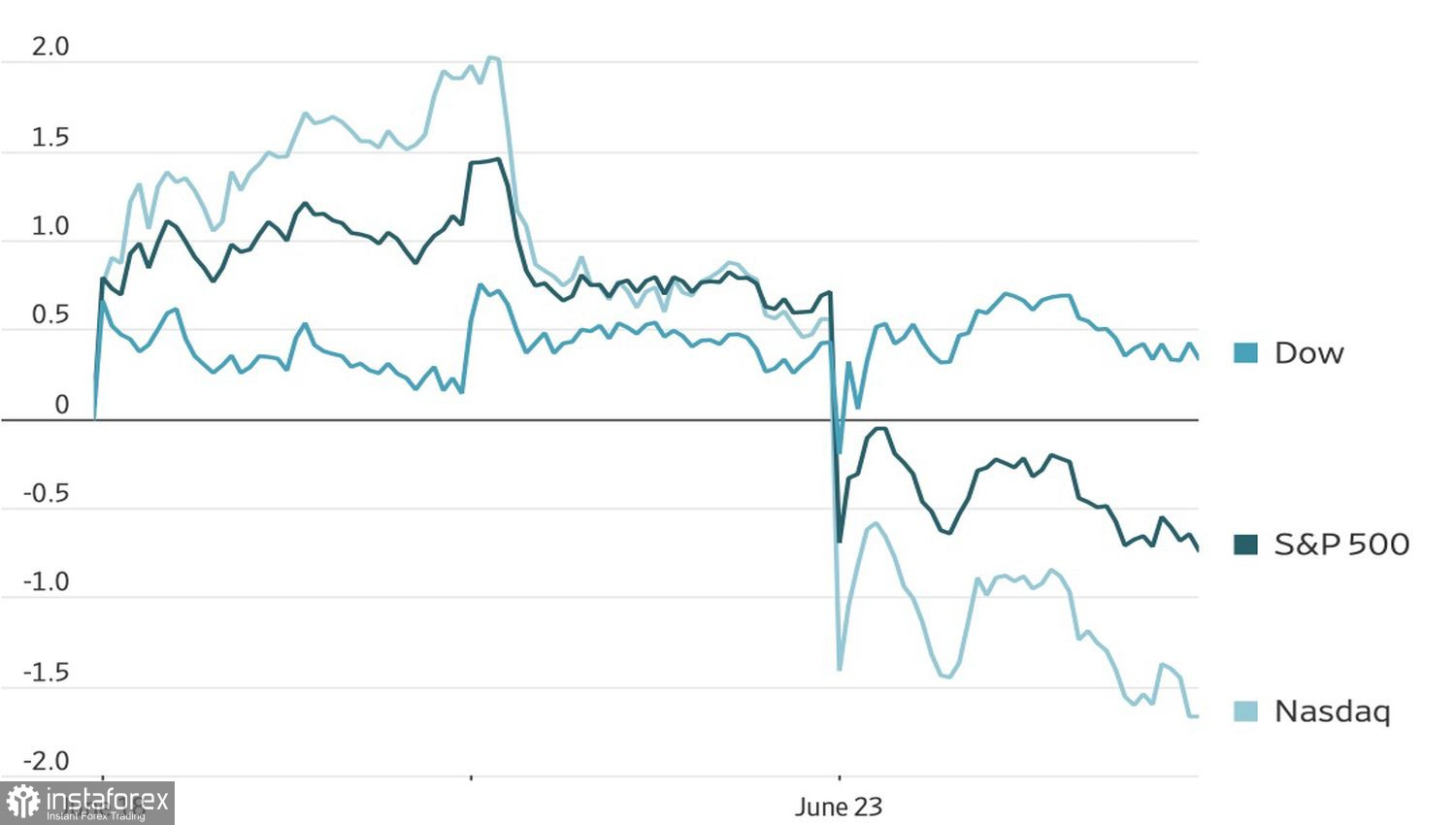
There are several reasons for investor concern. Manufacturing activity in the US has risen to its highest levels since 2021, which points to economic strength — but it also increases the Fed's confidence in the need to tighten monetary policy. The futures market assigns roughly a 70% probability to a rate hike in September. A strong economy is good news for corporate earnings, but bad for stock multiples.
Fears around artificial intelligence add more fuel to the fire. Some companies in the sector have begun cutting prices, and investors are growing increasingly worried about the scale of borrowing required to build data centers. The logic is simple: AI models are gradually becoming commoditized, and demand shifts toward the cheapest solutions. That raises concerns that the already huge infrastructure costs — chips, servers, electricity — may prove less remunerative than investors had hoped.
Expected tech spending dynamics
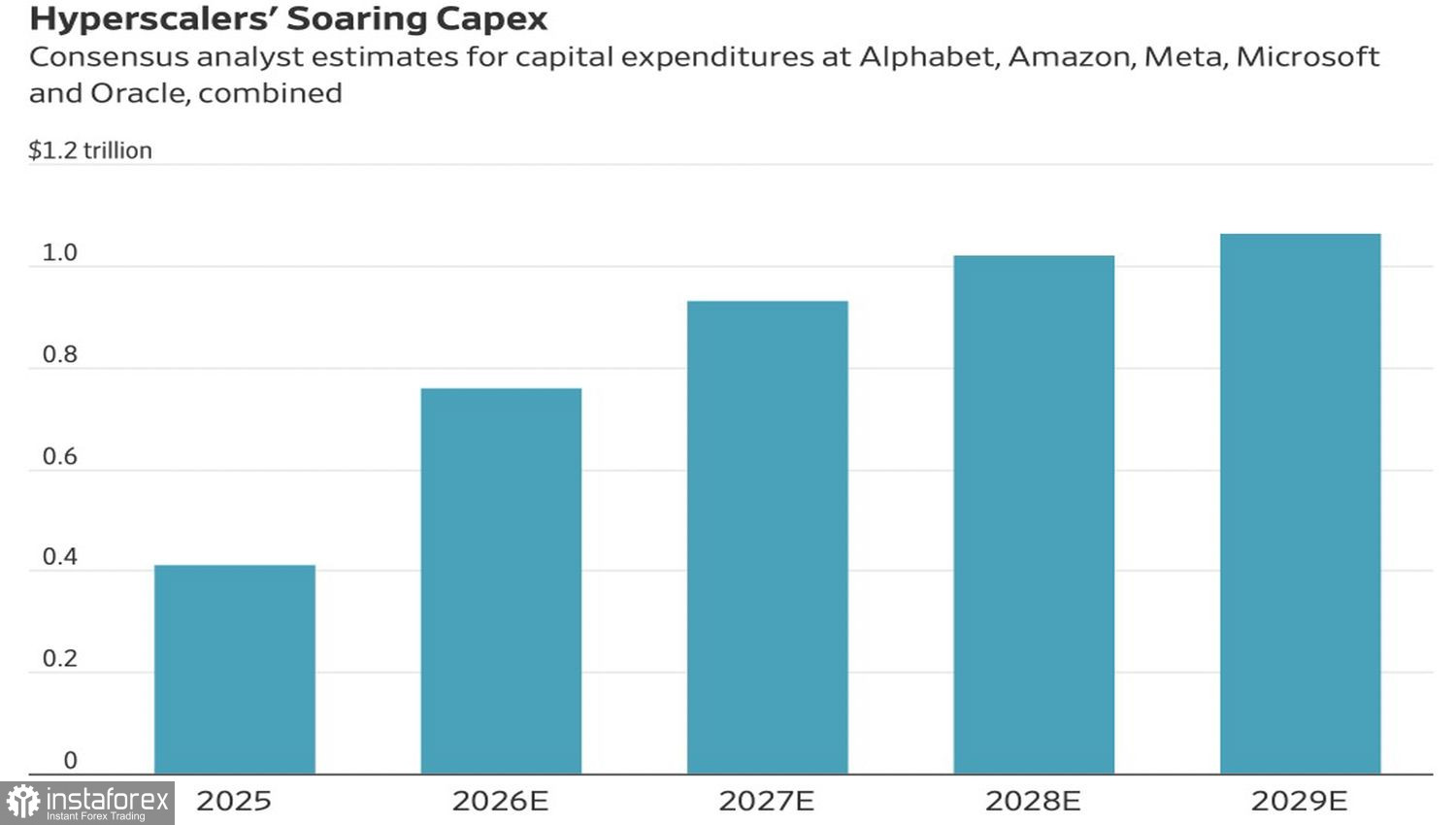
Wall Street is salivating over rising corporate profits, but there's a catch. Analysts expect S&P 500 earnings to grow about 20% for a second consecutive quarter, largely thanks to semiconductor manufacturers. However, a significant portion of that growth is an accounting timing effect. When NVIDIA sells chips, it recognizes the revenue and profit immediately, while its customers treat those purchases as capital expenditures and write them off over time through depreciation. The result is a classic mismatch: the seller books earnings now; the buyer pays over years.
Morgan Stanley calls the current period a "golden window where everything looks good," but the bank warns the picture could change soon. Once deferred costs begin to surface in the reports of hyperscalers (large cloud providers), the accounting magic may evaporate.
If de-escalation in the Middle East and falling oil prices cannot offset the Fed's hawkish stance and doubts about monetizing AI, the golden window could close much faster than S&P 500 bulls expect.
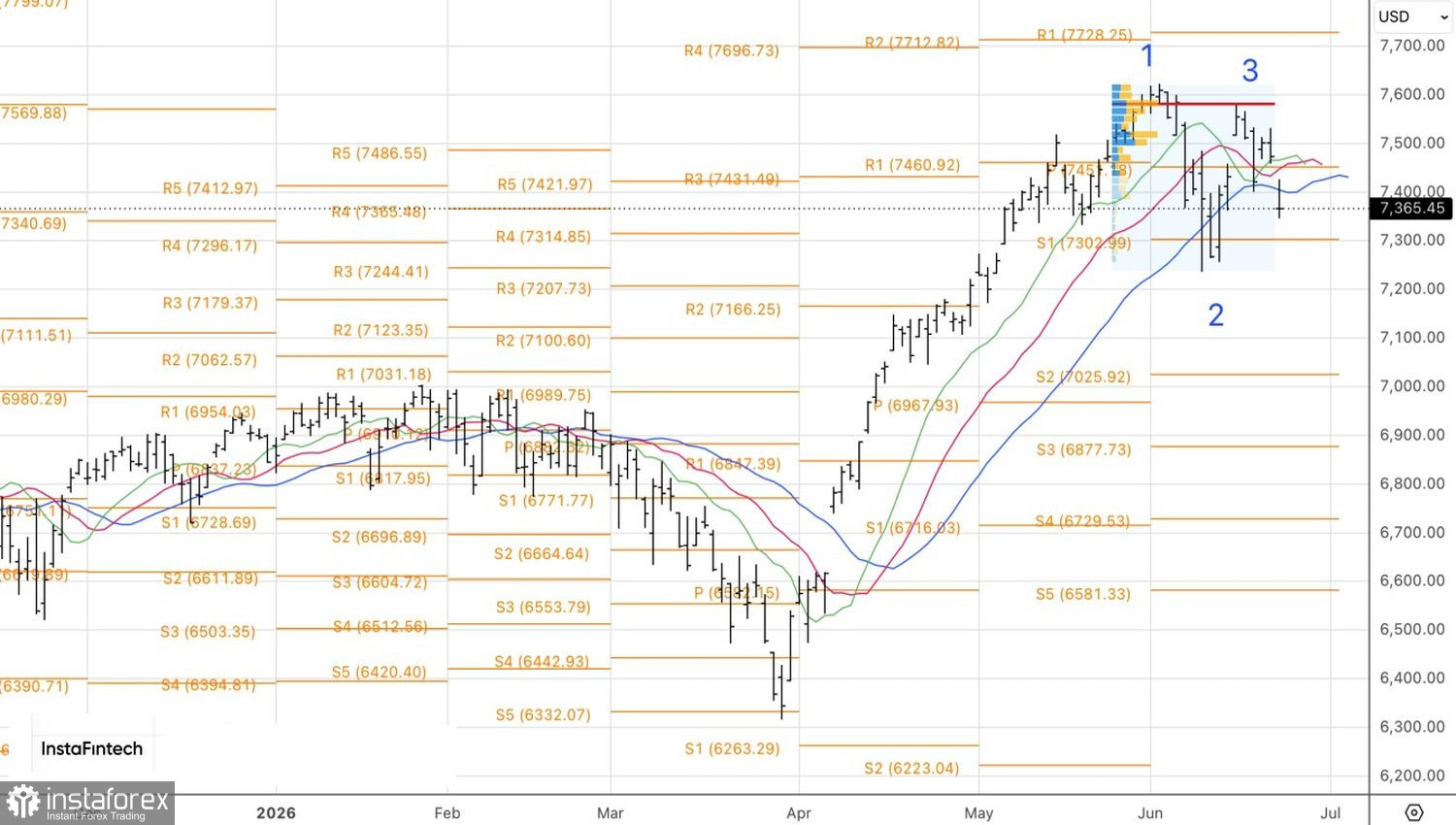
Technically, a 1-2-3 reversal pattern is forming on the S&P 500 daily chart. Its activation would occur if the pivot level at 7,305 is breached, which would allow traders to add to existing short positions. Conversely, a bounce off support would be a reason to return to buying the broad stock index.


