
यह भी देखें


 05.03.2026 04:12 AM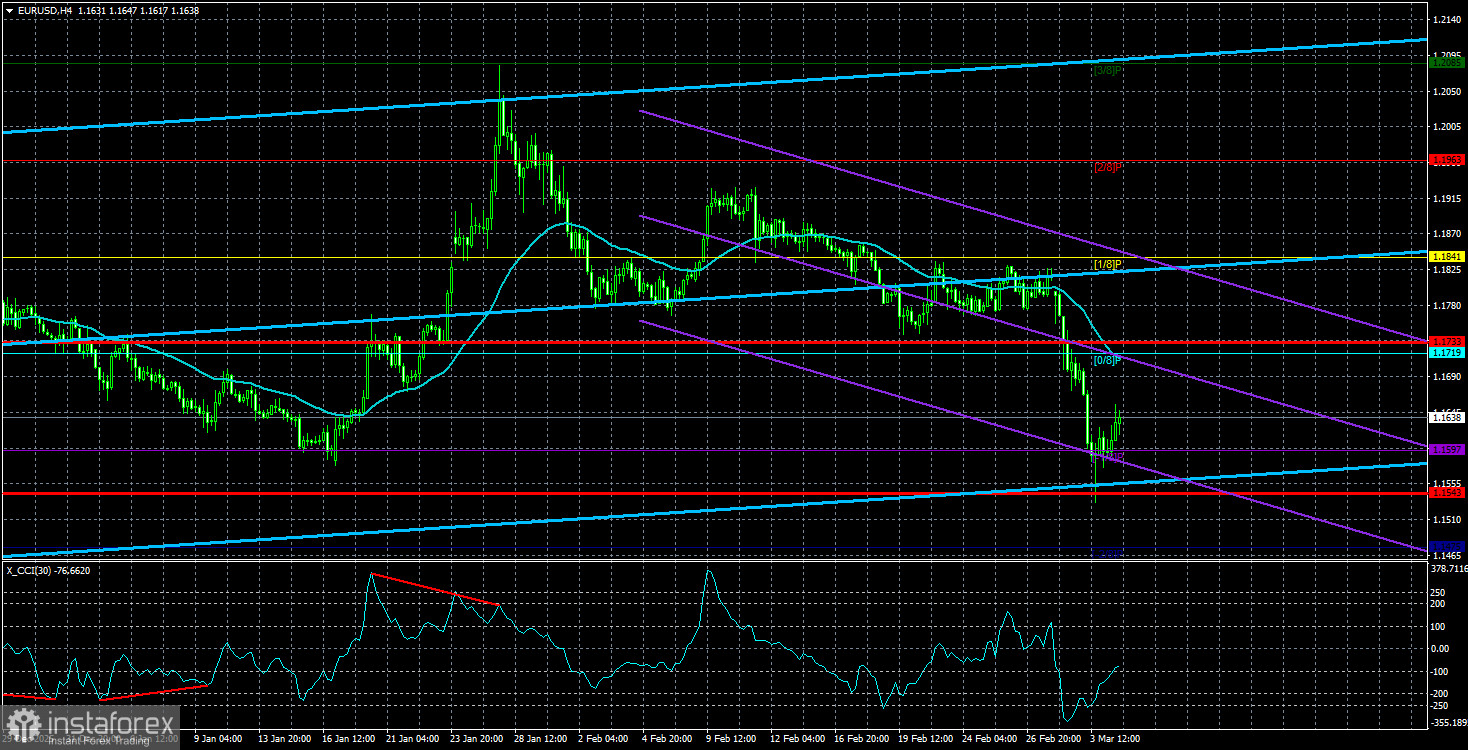
The EUR/USD currency pair halted its freefall and even posted a slight correction on Wednesday. However, it is still too early to conclude that the "dollar trend" has ended, as it is entirely dependent on the situation in the Middle East. Yet, we want to point out a simple logical chain expressed in the question, "What if the war in Iran lasts a month or even a year?" Will the dollar appreciate throughout this period? Unlikely. We believe that the market reacts strongly and emotionally to such events only at first, and then tends to forget about them. For instance, the war between Ukraine and Russia has been going on for its fifth year now, yet the dollar hasn't appreciated amidst the ongoing geopolitical conflict in Eastern Europe!
The same fate awaits the conflict in the Middle East. Perhaps the dollar will continue to trend upward for a week or even two. The fact is that Iran has begun launching attacks not only on American military vessels in the Persian Gulf or on Israel but also on all US bases that its missiles can reach, including Turkey and even Cyprus. It is unlikely that Greece or Turkey would welcome such circumstances, even if the strikes were directed solely at American military bases. Therefore, Iran may soon face severe bombardment not only from Israel and the US but also from America's closest allies in the region, and even from Turkey, which is a NATO member.
Of course, a new escalation of the conflict in the Middle East may further increase investors' demand for safe-haven assets like the dollar. However, we still believe the initial shock has passed, and if the dollar appreciates further, it will do so at a slower pace than on Monday and Tuesday. The market will gradually shift its focus to economic events, and the dollar has reasons to be cautious in this regard.
Recall that the US economy showed signs of slowing down in the fourth quarter. Overall, it is growing more slowly than during Joe Biden's tenure. Thus, the "golden age" of Trump has yet to reflect in real macroeconomic indicators. Inflation has slowed to 2.4%, allowing the Fed to transition to easing monetary policy in the near future. The energy crisis primarily affects Europe, but not the US. America has enough shale oil, and the main issue for Americans is Trump, not rising gasoline and gas prices.
Thus, we currently do not see enough grounds for the continued strength of the US currency. Admittedly, we did not expect the dollar to show such strong growth in February and March, but no one could predict the scale of the war in the Middle East in advance. Everyone thought it would be a military operation to eliminate key Iranian leaders and a second attempt to destroy the country's nuclear facilities. As often happens, reality turned out to be different.
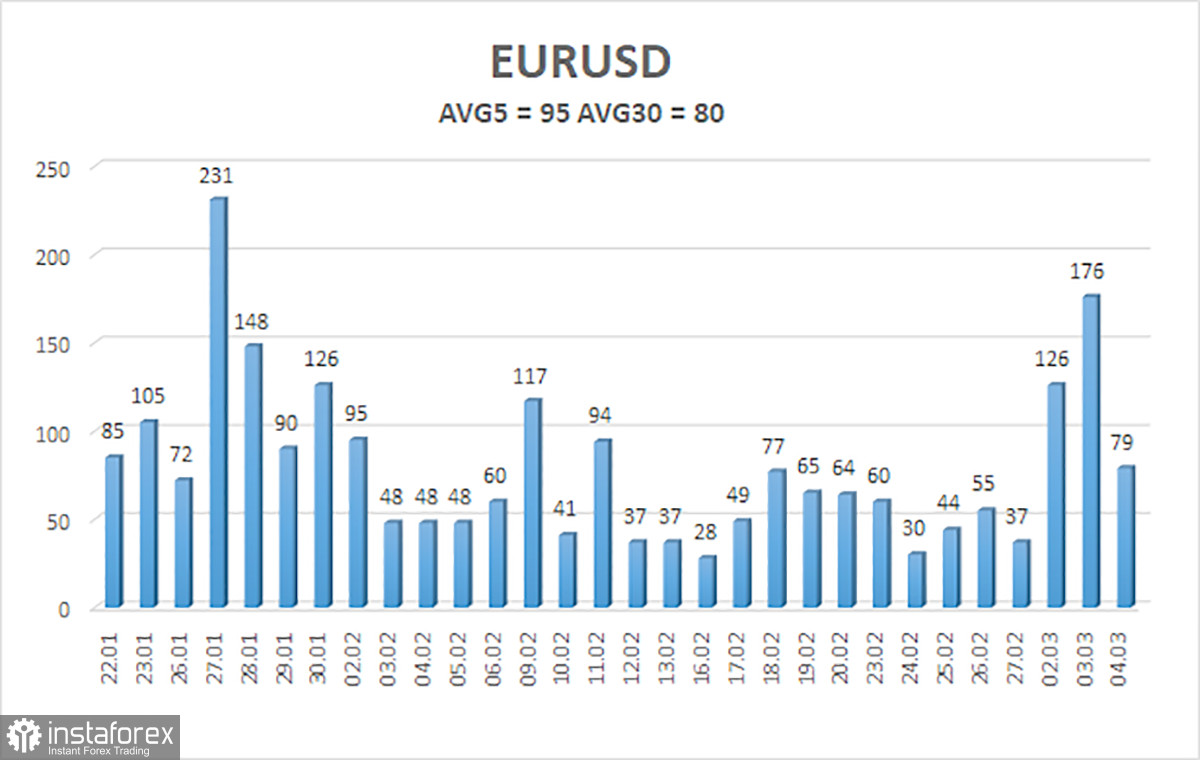
The average volatility of the EUR/USD currency pair over the last five trading days as of March 5 is 95 pips, which is considered "average." We expect the pair to range between levels 1.1543 and 1.1733 on Thursday. The upper channel of the linear regression is directed upward, indicating the preservation of the upward trend. The CCI indicator has once again entered the oversold area, further signaling a potential resumption of the upward trend.
S1 – 1.1597
S2 – 1.1475
R1 – 1.1719
R2 – 1.1841
R3 – 1.1963
The EUR/USD pair continues its correction within the upward trend. The global fundamental backdrop remains highly negative for the dollar. The pair has spent seven months in a sideways channel; it is likely we are now at a point to resume the global trend of 2025. The dollar currently lacks a fundamental basis for long-term growth. We are witnessing another global correction at this time. If the price is below the moving average, traders can consider small short positions targeting 1.1597 and 1.1543 based on technical (correctional) grounds and the complex geopolitical situation. Above the moving average, long positions remain relevant with targets at 1.1963 and 1.2085.

