
Lihat juga


 20.04.2026 12:33 AM
A new trading week begins, and I once again emphasize the importance of geopolitics and the status of the U.S. dollar. Recall that in most cases, the primary role is played by the U.S. news background. However, over the past two months, it has been largely disregarded by market participants, as their attention has been entirely focused on geopolitics.
In the two weekend days, many events occurred in the Middle East. Iran managed to cancel the lifting of the blockade and fired upon several commercial vessels attempting to transit through Hormuz. Donald Trump threatened Tehran with the resumption of military intervention if an agreement is not signed. The markets have been left waiting for only one thing—any information on the progress of negotiations between Iran and the U.S.
On Sunday, Tehran announced that the second round of negotiations will take place on Monday, while the ten-day ceasefire between Iran and the U.S. expires on Wednesday. Consequently, by Wednesday, the situation in the Middle East could escalate again, while negotiations may well fail before that day. Accordingly, next week, the market will likely trade primarily on geopolitical factors.
When examining the European calendar, two speeches by Christine Lagarde stand out immediately. Out of habit, I might call these events significant, although lately, Lagarde has spoken quite frequently without providing important information. On Tuesday, the Eurozone and Germany will release the ZEW Economic Sentiment Index. On Wednesday—nothing. On Thursday, indices of business activity in the services and manufacturing sectors for April will be released. On Friday, the Ifo Business Climate Index for Germany will be released. I cannot label any of these events as important, nor can any of them overshadow the geopolitical factor.
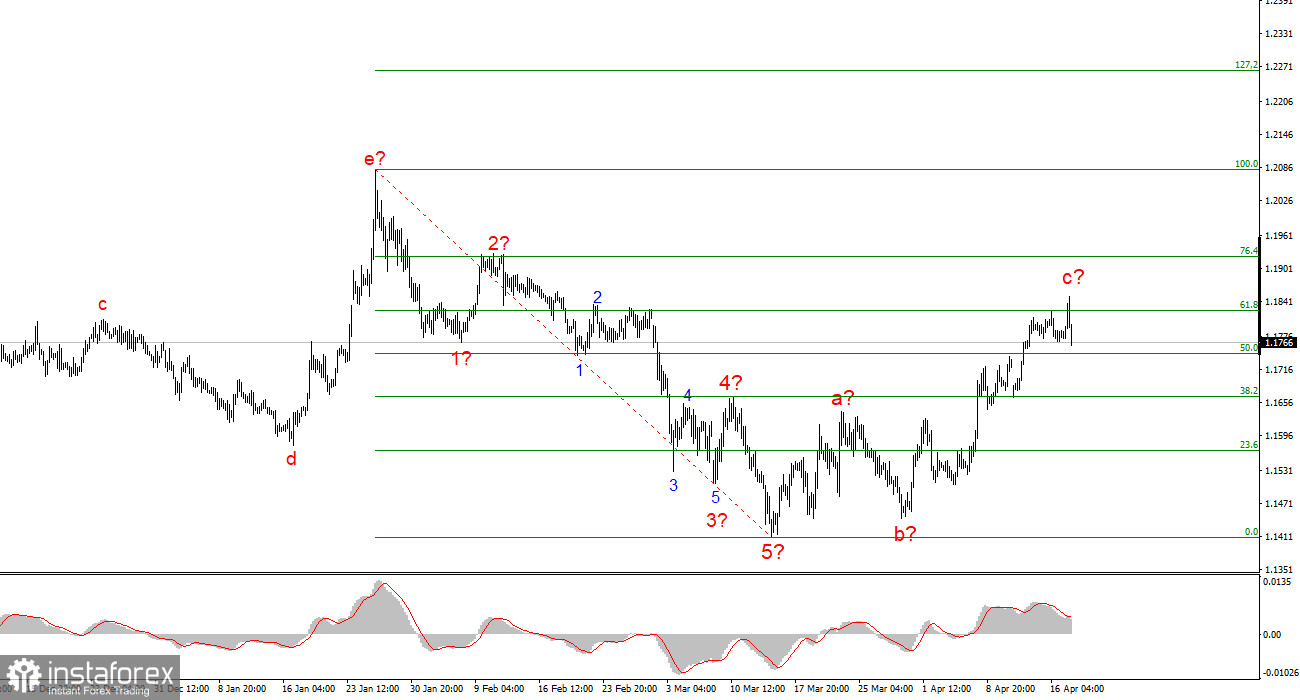
Based on the analysis of EUR/USD, I conclude that the instrument remains within an upward segment of the trend (see the lower picture) and, in the short term, is within a corrective structure. The corrective wave set looks quite complete and may take on a more complex, elongated form only if a stable and long-term ceasefire is established between Iran, the U.S., Israel, and ALL other countries in the Middle East. Otherwise, I believe that a new downward wave set may begin from the current positions. Or at least a corrective wave may develop if geopolitics continues to stabilize.
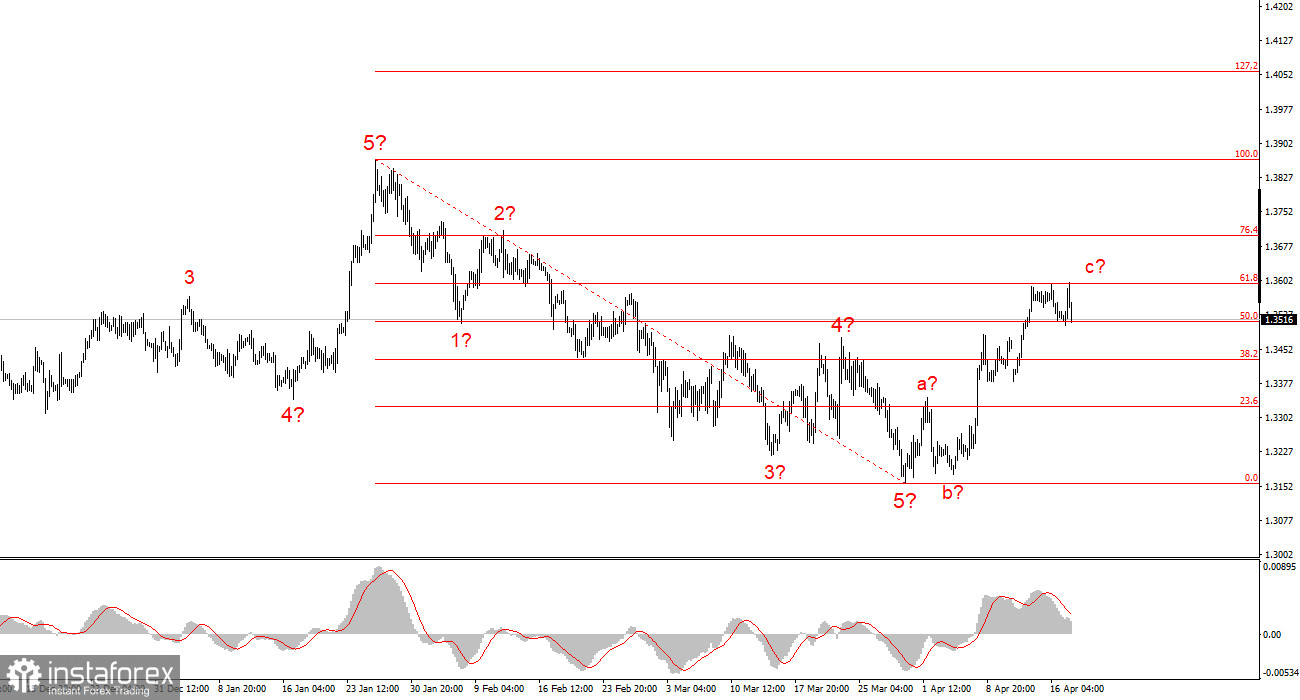
The wave picture of the GBP/USD instrument has become clearer over time, as I had anticipated. Now we see a clear three-wave upward structure on the charts, which may already be coming to an end. If this is indeed the case, we can expect the formation of at least one downward wave (presumably a "d" wave). The upward segment of the trend could take on a five-wave form, but this will require the conflict in the Middle East to diminish rather than rekindle. Thus, the base scenario for the coming days is a decline into the 34-figure area or slightly lower. Everything will once again depend on geopolitical factors.


