
یہ بھی دیکھیں


 13.03.2026 10:21 AM
Reality has finally set in. Iran's new supreme leader, Mojtaba Khamenei, intends to continue blocking the Strait of Hormuz and may widen attacks to other Middle Eastern states. Donald Trump claims that rising prices aren't the main issue — the priority is ending Iran's nuclear program so it doesn't hold the whole region hostage. The market, however, concluded the conflict will drag on. Equity indices fell in unison.
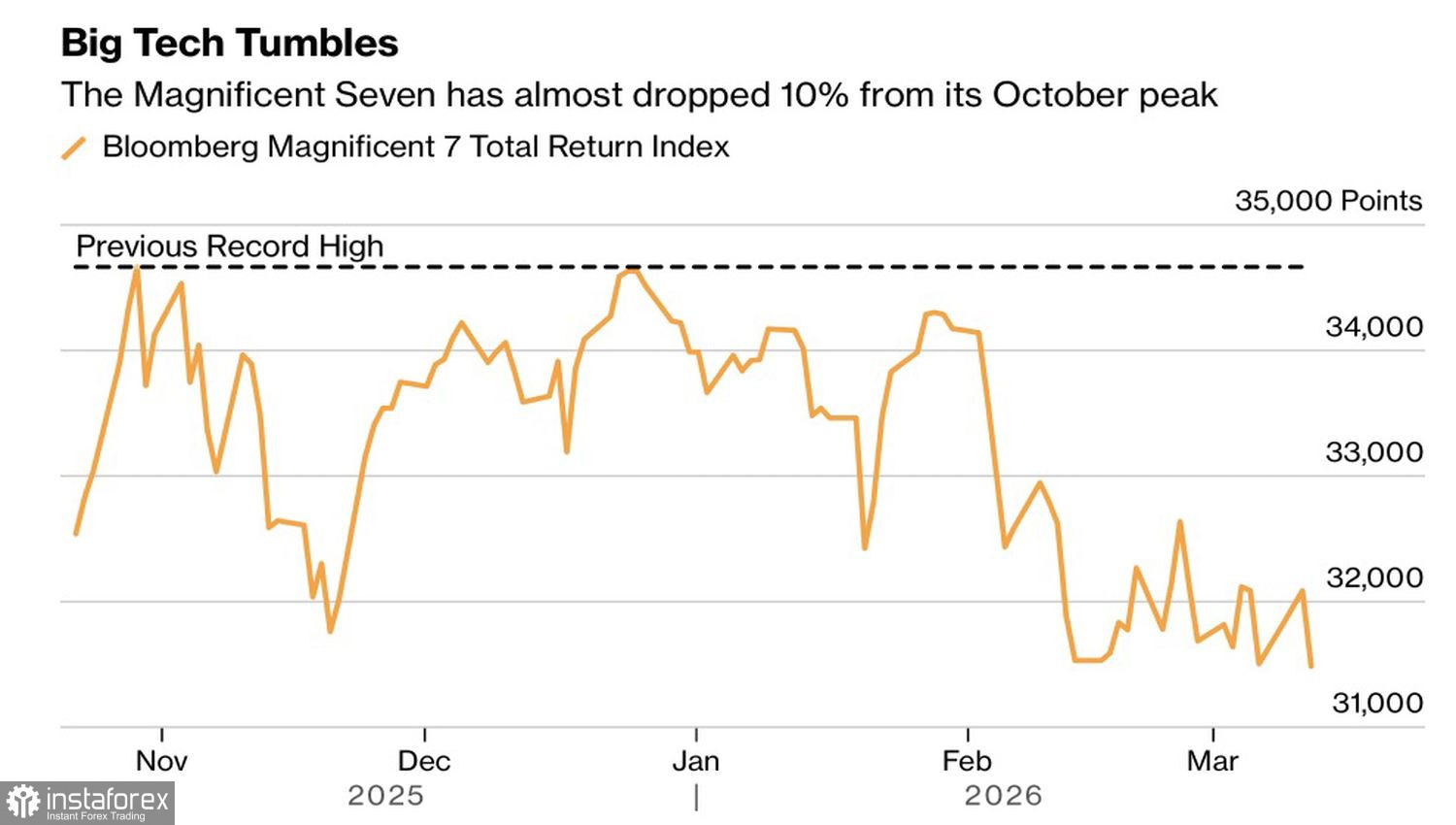
The S&P 500 closed in the red in five of the last six sessions and is about 7% below the record highs seen in October. The Magnificent Seven have dropped even further. A 10% pullback — the technical threshold into correction territory for the group — is now within reach.
Magnificent Seven performance
One reason is the retreat of the crowd. Retail investors had been little swayed by macro news and enthusiastically bought dips. But reality is unavoidable. A prolonged Middle East conflict will raise corporate costs and hurt earnings. The S&P 500 looks set to fall. It's no surprise that JP Morgan reports retail activity dropped about 30% last week.
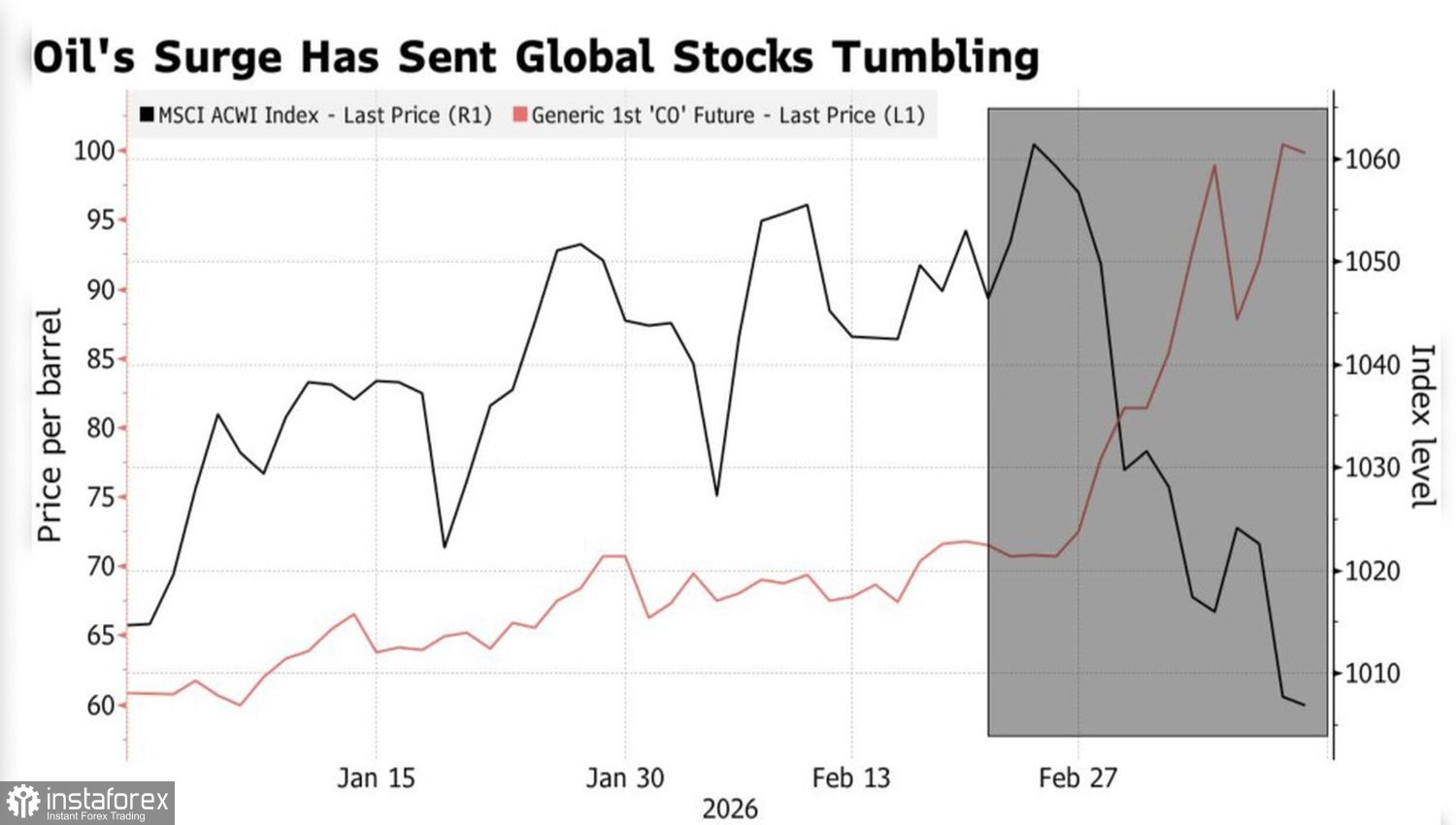
A complete blockade of the Strait of Hormuz could push oil to $150 per barrel, Macquarie Group warns; Wood Mackenzie says $200 is not impossible. Goldman Sachs is warning of a Brent average of $145 in March–April. Under such a scenario, US gasoline prices would surge, and consumption would fall, slowing the economy while boosting inflation. The stagflation risk is forcing investors to treat stocks as toxic.
Oil and global MSCI dynamics
Pressure on the S&P 500 is also coming from a sharply higher probability that the Fed's pause in rate cuts will extend to the end of 2026 — the odds that the central bank will deliver two cuts this year have collapsed from 79% to 16%, compared with 4% before the Middle East conflict.
That shift, together with rising inflation expectations, is pushing Treasury yields higher, increasing corporate costs and worsening earnings. Yet rising profits formed the basis of Wall Street analysts' bullish forecasts for the broad index at the start of 2026.
Add to this the White House's sweeping probes into unfair trade practices that could lead to new tariffs under Section 301 of the Trade Act, and the stock market decline looks inevitable.
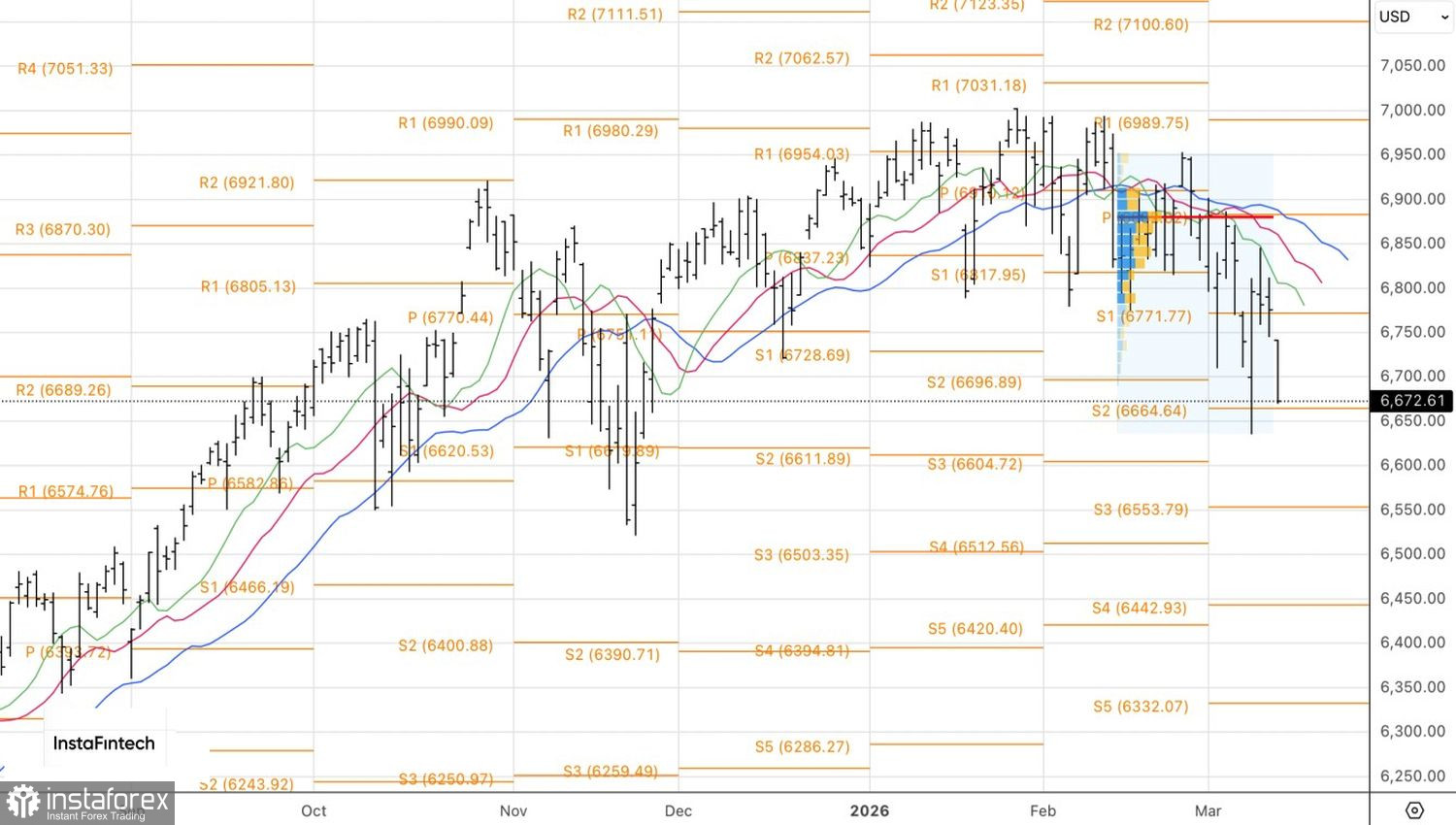
Technically, the daily S&P 500 chart shows the bears have won the battle for the key 6,770 level, allowing short positions to build. A break of the pivot at 6,660 and a sustained close below it would justify ramping up selling.


