Vea también


 23.06.2026 08:47 AM
After the situation in the Middle East has stabilized, traders are now focused on the statements and actions of the U.S. Federal Reserve. Yesterday's reaction to Fed representative Austin Goolsbee's speech is direct evidence of this.
During the interview, Goolsbee stated that he remains concerned about inflation and doubts that all the factors causing price increases are temporary. This event marks a new stage in the dynamics of currency markets, where caution and responses to central bank signals take center stage. Indeed, Goolsbee's comments were perceived as a hint of tighter measures from the Fed in the fight against price pressures. The subsequent strengthening of the dollar is a logical, albeit not the only, consequence.
Moreover, Goolsbee's statements could prompt a reevaluation of market expectations about the pace and scale of interest rate increases. If, previously, the sentiment leaned towards a more relaxed cycle of monetary policy tightening, those views may now be significantly altered.
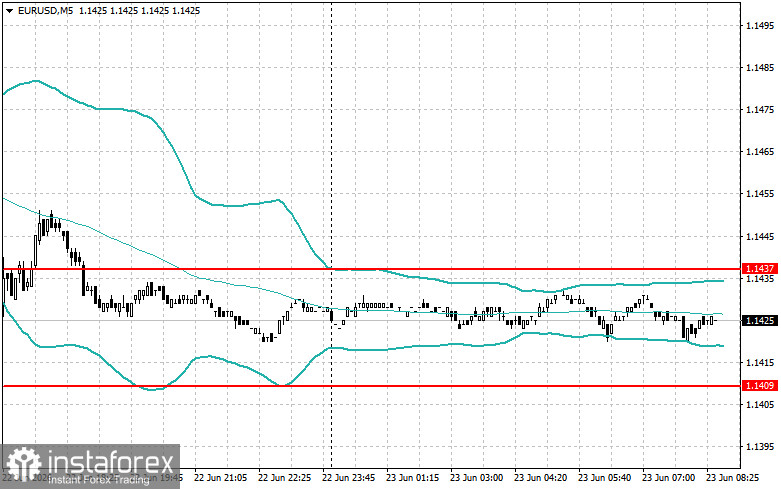
The first half of the day promises to be eventful, with Eurozone economic data that could significantly impact the euro. Particular interest lies in the manufacturing and services indices, as well as the composite PMI index. These indicators are sensitive barometers of economic health and can help assess current trends across various sectors.
Expectations among experts are mixed. On the one hand, there is hope of maintaining positive momentum, driven by the gradual recovery of the global economy amid the opening of the Strait of Hormuz. On the other hand, ongoing geopolitical risks, supply chain issues, and high inflation could still negatively affect production figures and activity in the services sector. If the published data is worse than forecasted, it will likely lead to further weakening of the euro.
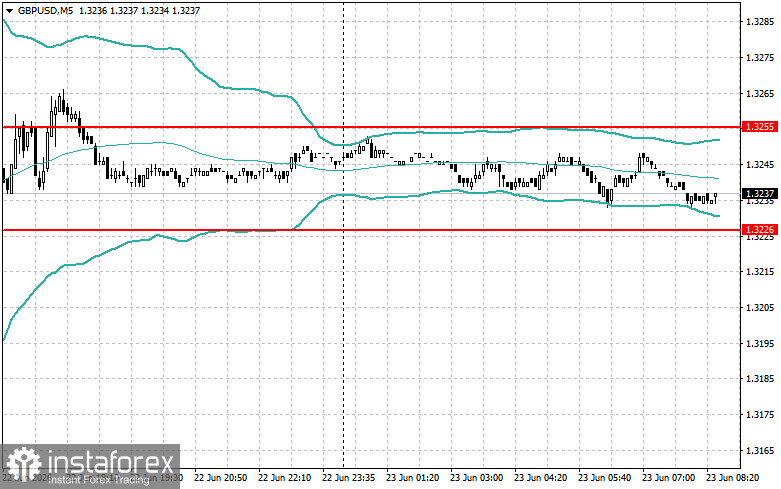
As for the pound, the first half of the day also promises to be crucial. The publication of the PMI indices for the manufacturing and services sectors, and the composite PMI, for June is expected. These figures serve as barometers of the British economy, reflecting its dynamics and potential risks. Historically, strong PMI data have acted as a catalyst for the growth of the British pound, signaling healthy business activity and a potential acceleration in economic growth. Conversely, weaker-than-expected figures may put additional pressure on the currency, especially amid current uncertainties related to inflation expectations and domestic political issues in the UK.
In addition to the statistical data, the market will be closely monitoring the speech of Bank of England's Monetary Policy Committee member Martin Taylor. His comments may provide valuable signals about the central bank's future steps on interest rates and inflation-control measures.
If the data aligns with economists' expectations, it is better to act based on the Mean Reversion strategy. If the data comes in significantly higher or lower than economists' forecasts, it is best to use the Momentum strategy.