
Vea también


 21.07.2026 02:18 PM
Every cloud has a silver lining. The Middle East conflict has been flaring for the tenth consecutive day; the Houthis are threatening a naval blockade of Saudi Arabia, and Brent has gained about 20% so far in July. It would seem that all the cards are stacked against EUR/USD — the US dollar should be bought as a safe haven. Yet the major currency pair shows no sign of falling.
The US and Iran have been exchanging strikes for a full decade of days, while mediators have so far failed to revive the June truce. Tehran insists on control over shipping, further complicating matters. Iran-backed Houthis threaten to cut off sea routes for Saudi oil, a move that could deprive the market of millions of barrels of exports. Goldman Sachs does not rule out Brent rising above $120 per barrel by Q4 if disruptions in the Strait of Hormuz continue, though the bank does not view that as its base case.
Rising oil is stoking US inflation expectations and will, sooner or later, force the Fed to talk about rate hikes — good news for the dollar. Still, the euro has found an unexpected trump card: Germany.
ZEW expectations index dynamics for Germany
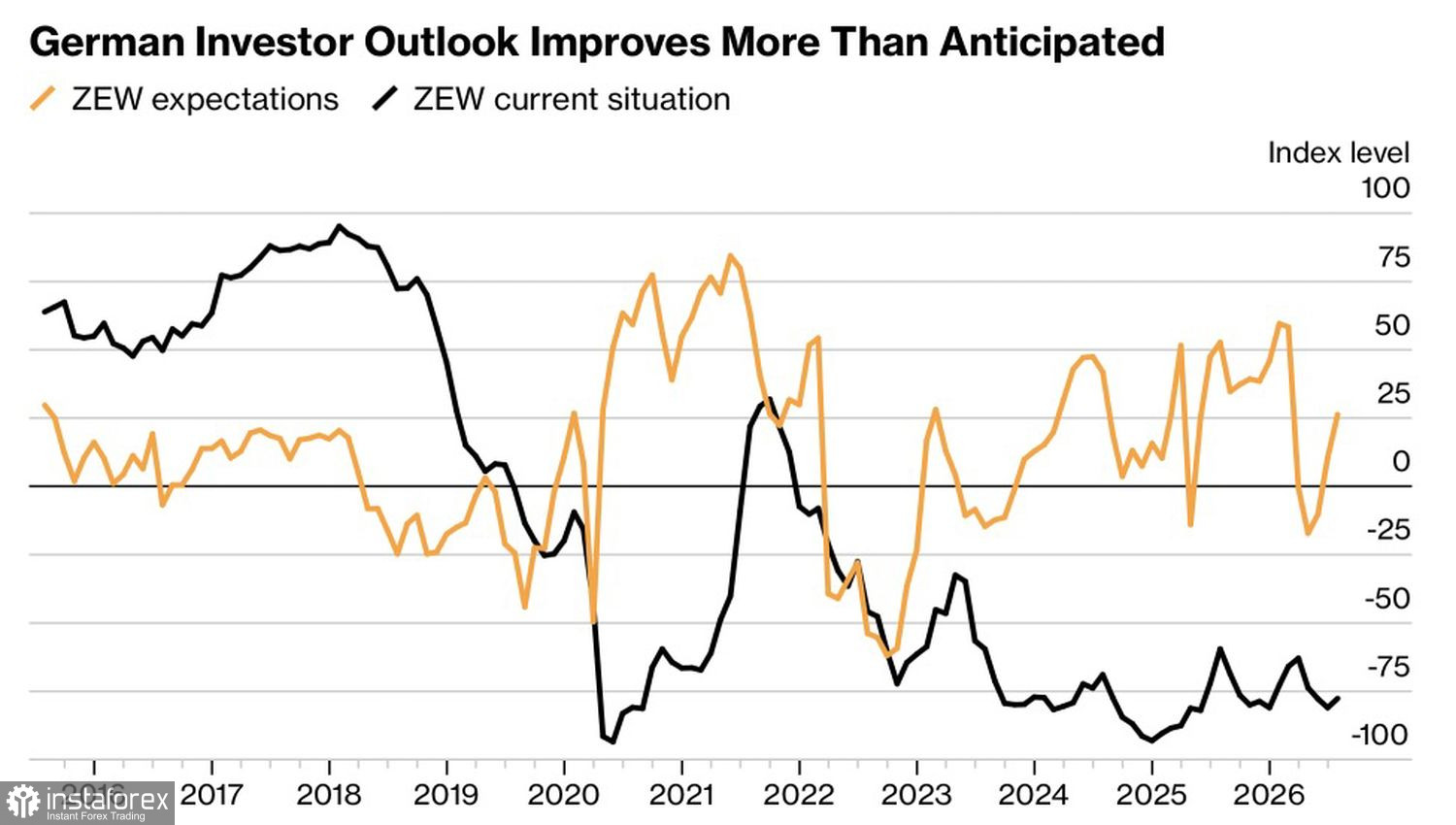
The ZEW expectations index jumped to 26.3 in July from 10.5 in June, well above the Bloomberg consensus of 15.3. Investors have put faith in the reforms promised by Chancellor Friedrich Merz, who says he will pull the eurozone's largest economy out of a prolonged slump. Germany's Economy Ministry cautiously notes signs of stabilization while warning that higher energy prices will continue to weigh on businesses.
Morgan Stanley retains a neutral-to-bullish view on the euro in the short term. The bank believes the ECB will keep a September rate hike on the table, and Christine Lagarde's hawkish tone at the last press conference only reinforced those expectations. A potential catalyst could be the expiry of US tariffs on July 24 — if Washington does not replace the Section 232 and 301 measures, Germany's effective tariff rate could fall by more than 3 percentage points, noticeably better than many other advanced economies.
The result is a paradox: geopolitics is working for the dollar, while domestic politics in Berlin is working for the euro. At the same time, the ECB-Fed interest rate differential continues to narrow, which in itself favors bulls in the major currency pair. Which force will prevail once the market prices the tariff expiry and Q3 eurozone inflation data? For now, the scales are balancing, and EUR/USD consolidation looks entirely natural.
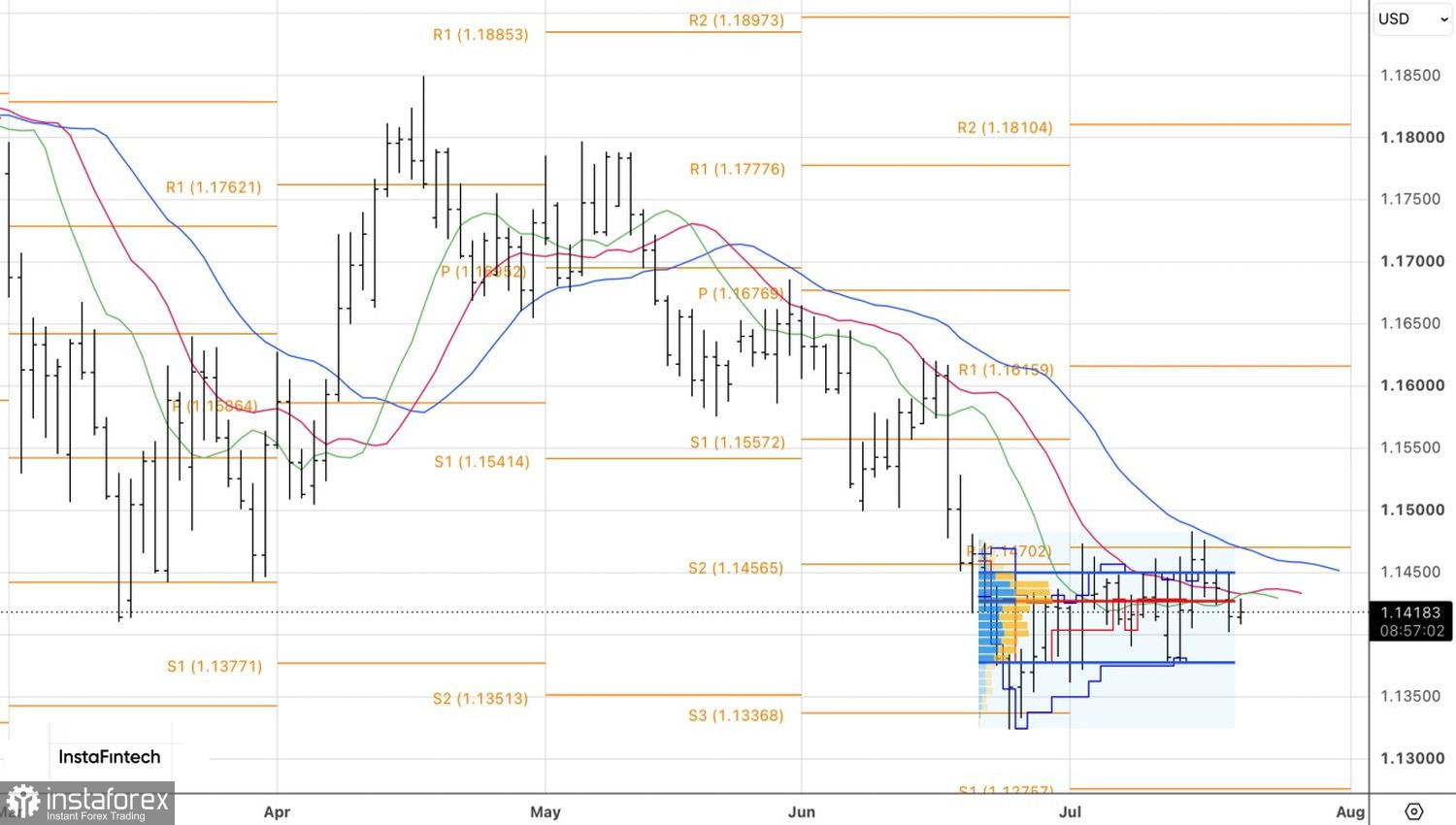
Technically, on the daily chart, the major currency pair is consolidating in the 1.1375–1.145 range. A strategy of buying the dips near the lower boundary and selling into the top of the range is working like clockwork. It makes sense to stick with it until EUR/USD breaks out of the box.


