
Vea también


 04.09.2026 05:37 AM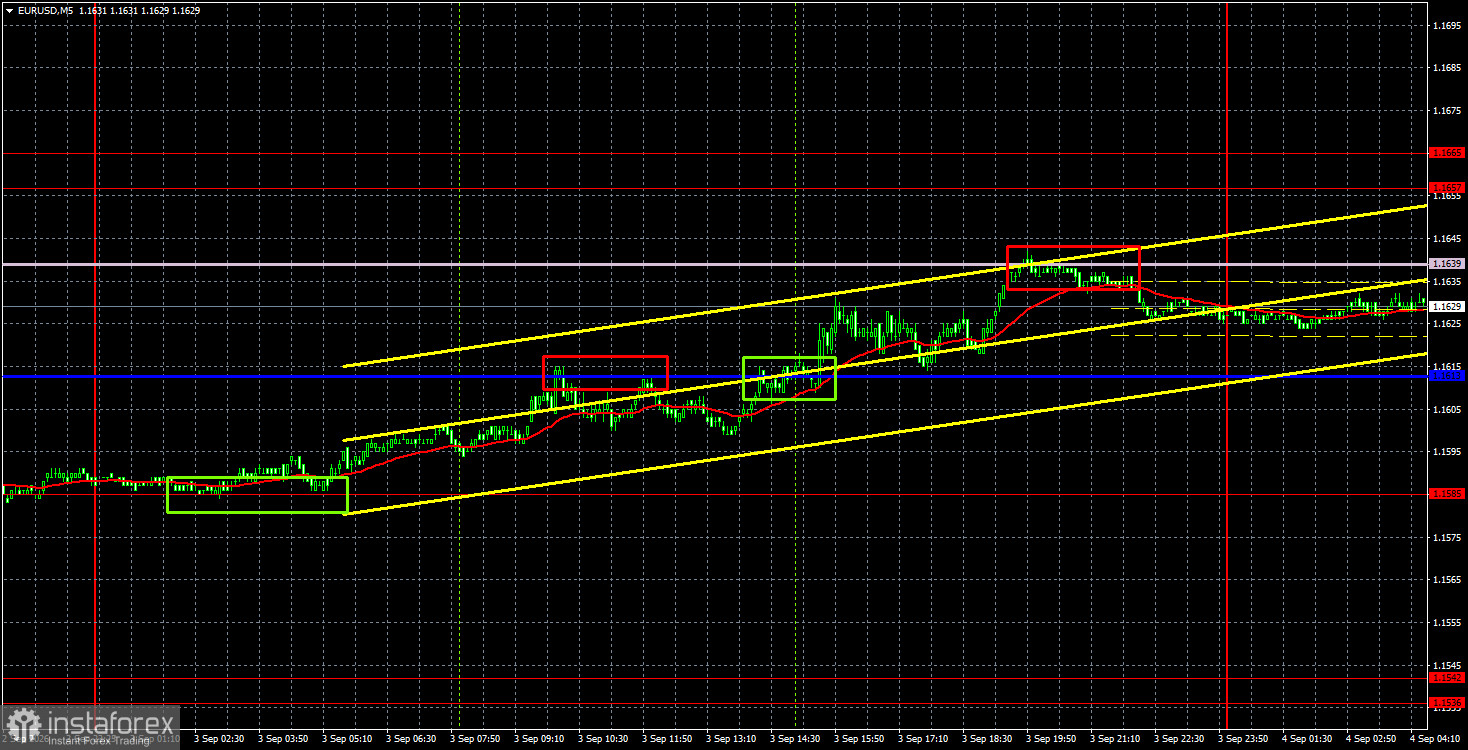
The EUR/USD currency pair failed to continue the downward move on Thursday, even though the day provided grounds for a new decline. The day's most important report — the US ISM services business activity index — showed a higher-than-expected reading, yet the dollar fell that day. This convinced us that the macroeconomic backdrop still has no real influence on FX market moves. Recall that this week, all reports in the EU and the US (except the latest ISM report) were unfavorable for the dollar. Nevertheless, the US currency rose during the first three days of the week. On Thursday, it fell instead, even though ISM should have supported it. Thus, we tend to believe the issue is Federal Reserve monetary policy. The market does not understand what to expect from the September meeting, so it keeps swinging. As the probability of monetary tightening fell again, the US dollar began to decline. We also remind traders that in the medium and long term the euro is biased upward.
Technically, the pair has completed the downward trend, as evidenced by the break of the trend line. However, the Senkou Span B line has not yet been overcome, so in theory the dollar's rise could still resume. Today, the pair's dynamics will be entirely dependent on Nonfarm Payrolls and the unemployment rate.
On the 5-minute TF on Friday, four trading signals were generated, but whether they were worth trading is a big question. First, the only important report of the day pointed to a decline in the pair, even as we observed its rise all day. Second, the signals formed between Ichimoku lines and levels separated by only 20–30 pips. Opening trades aiming for just 20–30 pips was, at best, impractical.
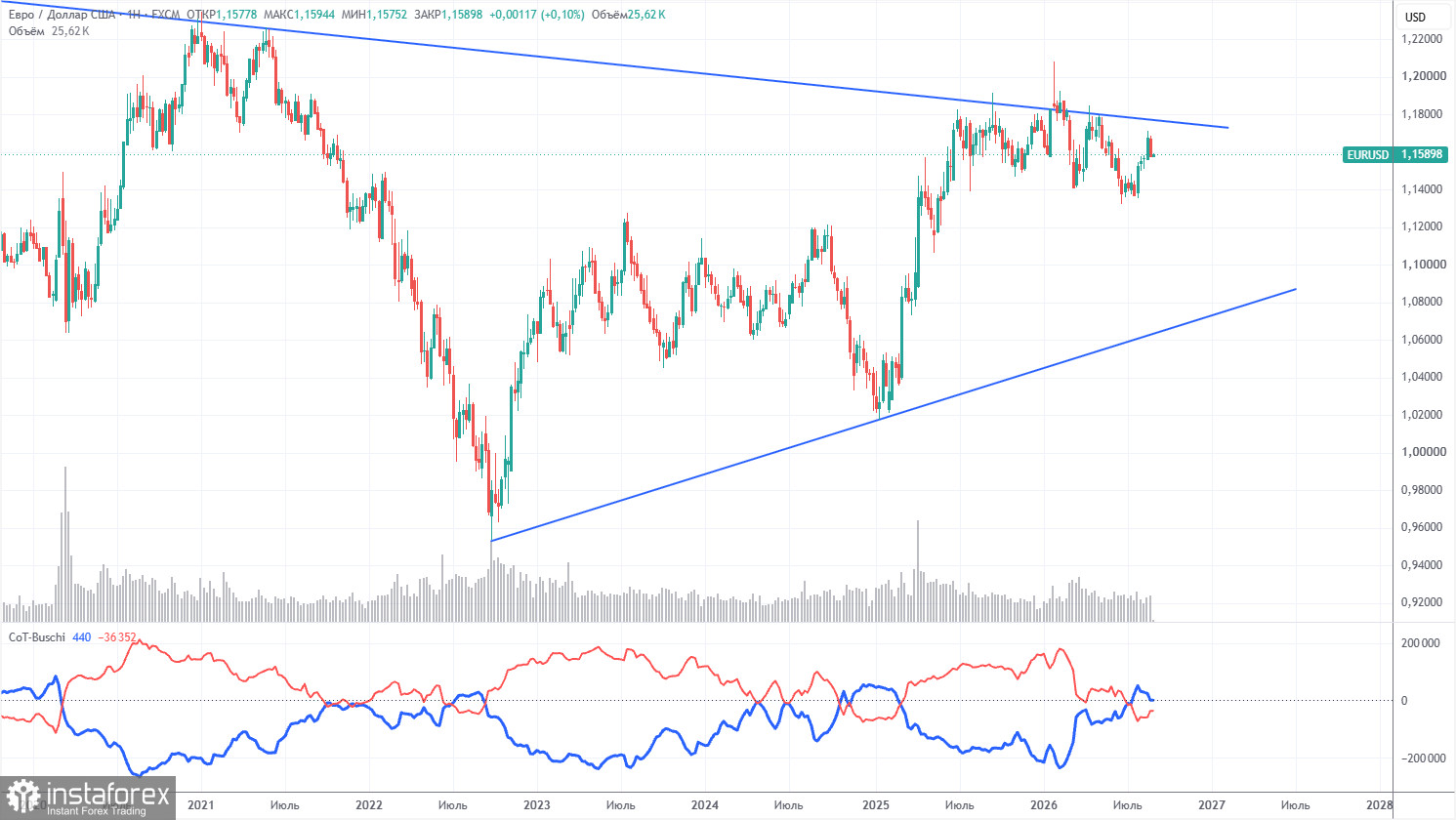
The latest COT report is dated August 25. On the weekly TF, it is clear that the non-commercial traders' net position turned "bearish" and fell significantly in 2026 due to geopolitical events. Traders have been trimming euro exposure in favor of the US dollar in recent months. Trump's policy has not changed, but the dollar has, for a time, acted as the "reserve currency."
We still see no fundamental factors to strengthen the US currency. The Middle East war made the dollar temporarily super-attractive, but when that factor expires, everything will return to normal — and this process may already be complete. In the long term, the euro could fall as low as $1.08 (trend line), but the uptrend will remain relevant. After recent months of dollar strength, the pair has not come close to that trend line.
The red and blue COT indicator lines point to approximate parity between bulls and bears. During the last reporting week, the number of long positions among Non-commercials rose by 2,700, while short positions decreased by 20,000. Accordingly, the net position increased by 22,700 contracts for the week.
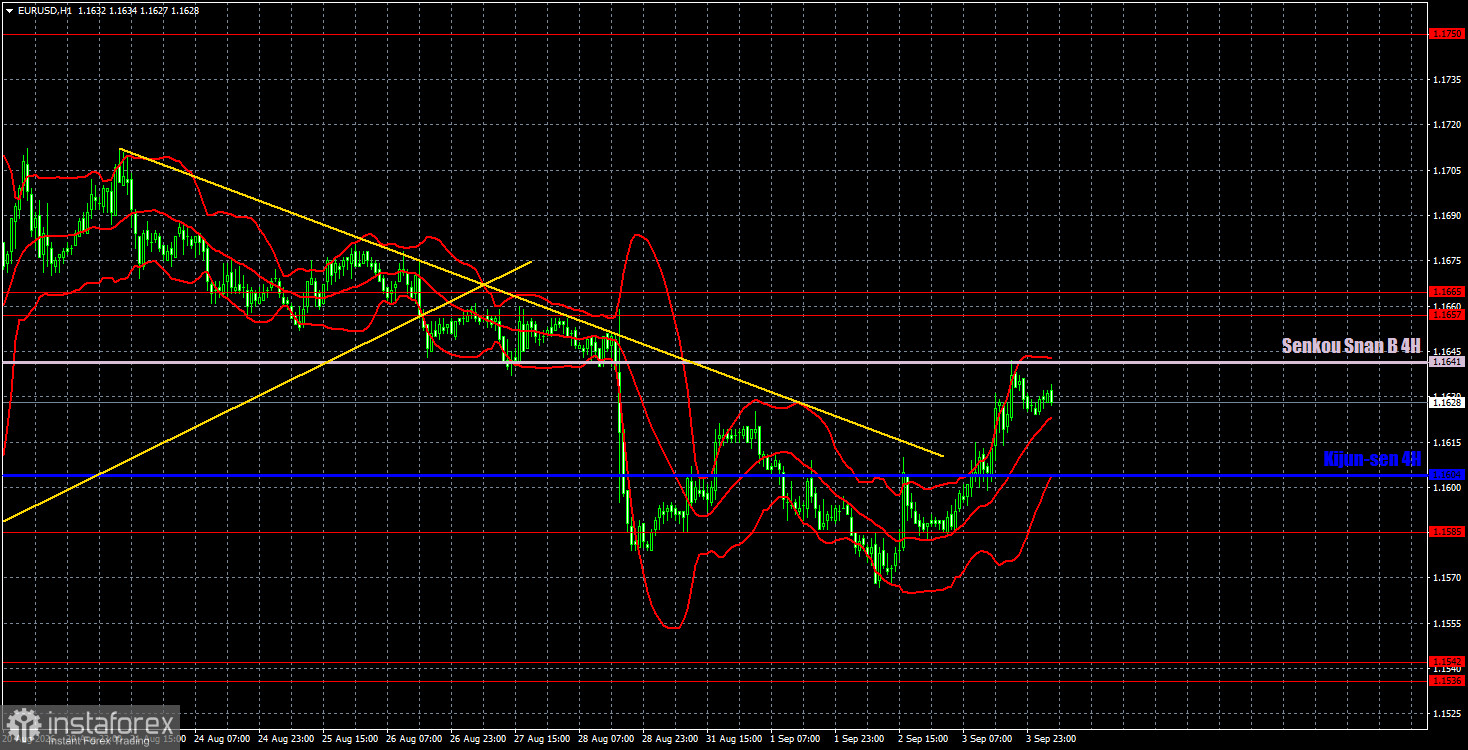
On the hourly timeframe, the EUR/USD pair may begin a new upward trend. The situation in the Middle East remains tense and is not improving, but this is insufficient to trigger a new, powerful dollar rally. Kevin Warsh's comments and the annual Nonfarms supported the dollar, but we see no strong grounds for optimism about the US currency. Overcoming the Senkou Span B line will open the way up for the euro.
For September 4 we highlight the following trading levels — 1.1234, 1.1274, 1.1362–1.1368, 1.1461–1.1473, 1.1536–1.1542, 1.1585, 1.1657–1.1665, 1.1750–1.1760, 1.1786, 1.1830–1.1837, and also the Senkou Span B (1.1641) and Kijun-sen (1.1604) lines. Ichimoku lines may shift during the day, which should be taken into account when determining trading signals. Do not forget to move the stop loss to breakeven if the price moves 15 pips in the correct direction. This will protect you from potential losses if the signal proves false.
On Friday, the EU will publish a relatively unimportant retail sales report that is unlikely to attract the market's attention. In the US today are the week's reports — Nonfarm Payrolls and the unemployment rate. These reports largely determine the Fed's September decision and market expectations, so traders' reaction today may be strong.
Today, traders may consider short positions targeting 1.1585–1.1604, or lower, if the price bounces off the Senkou Span B line. A break above the 1.1657–1.1665 area would allow opening long positions targeting 1.1750–1.1760.


