
Vea también


 19.01.2026 02:14 PM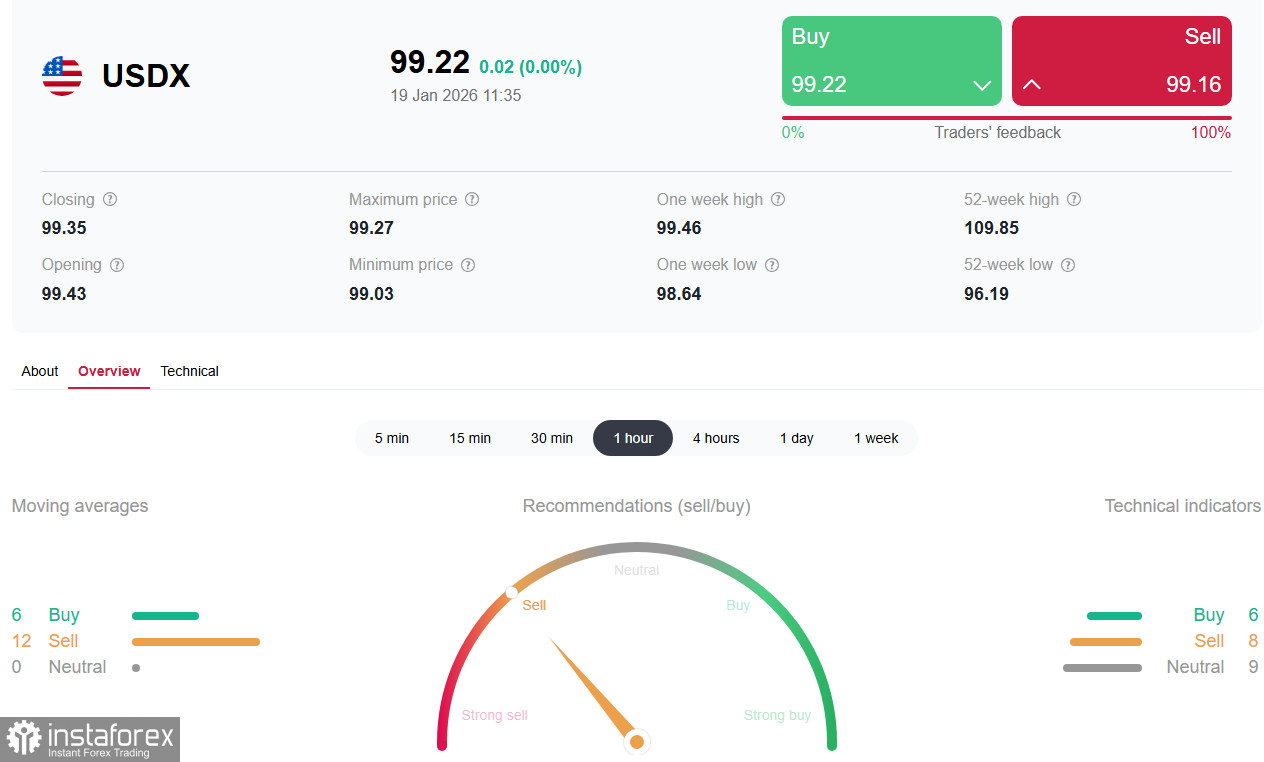
*) see also: InstaTrade Trading Indicators for USDX
At the start of the new week, the US dollar came under pressure amid rising geopolitical tensions and heightened tariff risks. Futures on the dollar index are trading near the level corresponding to the important medium?term support EMA144 (on the USDX daily chart) in the first half of Monday's session, having opened sharply lower as US?EU geopolitical tensions intensified.
Major US equity indices are also showing corrective weakness and setting up the potential for a negative weekly close. The primary source of pressure has been new tariff risks prompted by statements from US President Donald Trump, along with rising tensions between the US and EU countries, as noted in our today's review "S&P 500: current snapshot and outlook." The market is exercising increased caution: investors are simultaneously assessing the consequences of a potential US?EU trade war and the prospects for shifts in Federal Reserve monetary policy.
US tariff policy and pressure on USD
A key negative factor for the dollar has been recent statements by President Donald Trump. From February 1, a 10% tariff is planned on goods from eight European countries, including Germany, France, the UK and the Nordic states. From June 1, the rate could be raised to 25% if the US and its partners do not reach agreements on the Greenland issue.
In response, the European Union has prepared a package of potential countermeasures of up to €93bn, stepped up consultations on using anti?coercion trade tools and is considering mirror tariff steps against the US.
The market views these developments as a risk of an escalating trade conflict, which weighs on the dollar and reduces its attractiveness as a reserve currency in the short term.
Geopolitics and NATO factor
Additional pressure is created by the political context:
These factors increase uncertainty and encourage capital reallocation out of the dollar into alternative safe-haven assets, primarily precious metals — which hit new record highs today — and the Swiss franc.
Fed outlook: new uncertainty
Alongside trade risks, the dollar is pressured by uncertainty around the future leadership of the Federal Reserve. This week, the nominee to succeed Jerome Powell is expected to be announced. Reportedly among the frontrunners are former Governor Kevin Warsh and Trump adviser Kevin Hassett.
Markets interpret a possible change in Fed leadership as a signal of potentially more dovish policy, more receptive to administration calls for rate cuts to stimulate growth. Those expectations cap the dollar's upside.
At the same time, Trump's statement that he does not intend to remove Powell early introduced an element of short?term stability, preventing a deeper collapse in the currency.
Thus, the dollar finds itself in a trap. On the one hand, geopolitical crisis can temporarily support it as a safe haven. On the other hand, the crisis's effects on the US economy and a potential Fed policy shift are powerful drivers of weakness.
This creates a mixed fundamental backdrop for the dollar: expectations of policy easing exert pressure, while the absence of immediate Fed action restrains a deeper decline.
Technical analysis and movement scenarios
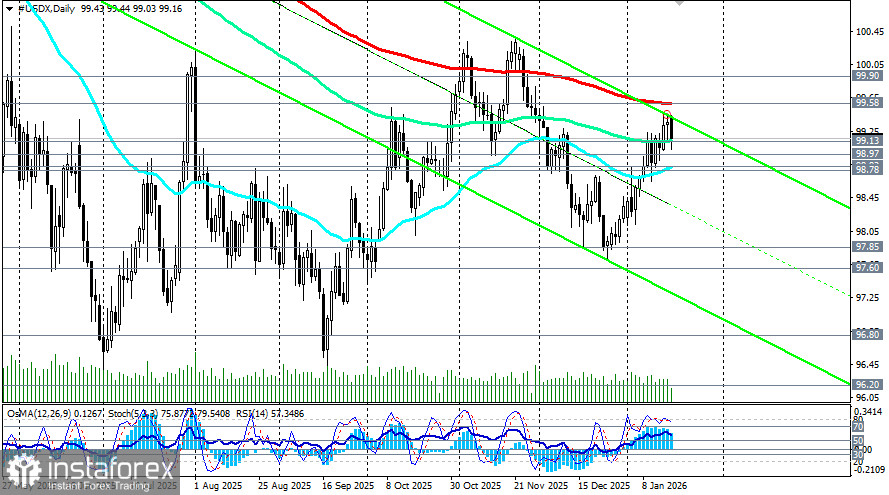
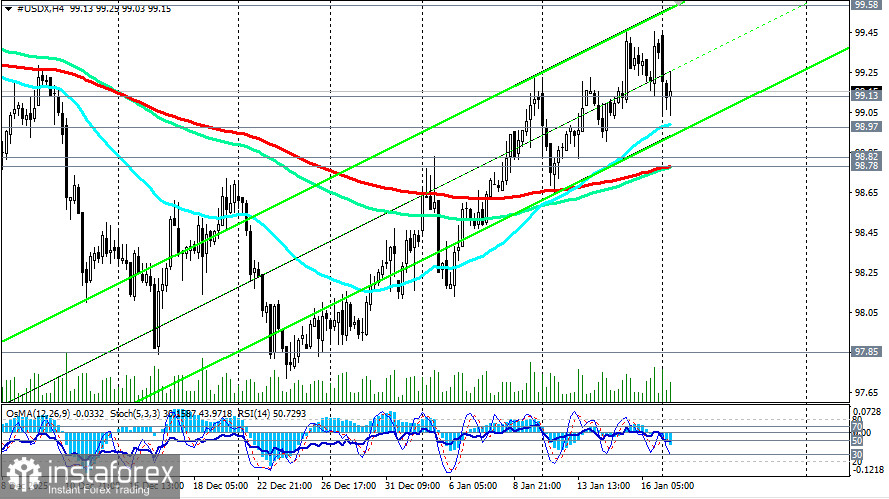
The USDX index is testing the important medium?term support level of 99.13 (EMA144 on the daily chart). Holding the 99.13–98.97 zone (EMA200 on the 1?hour chart) is critical for bulls.
Main scenario (negative). If negative news on a trade war dominate and rumours of a "dovish" Fed chair candidate circulate, there is a high probability of a break of the 99.13–98.97 support zone and a move toward the next targets in the 98.82 (EMA50 on the daily chart) – 98.78 (EMA200 on the 4?hour chart) area.
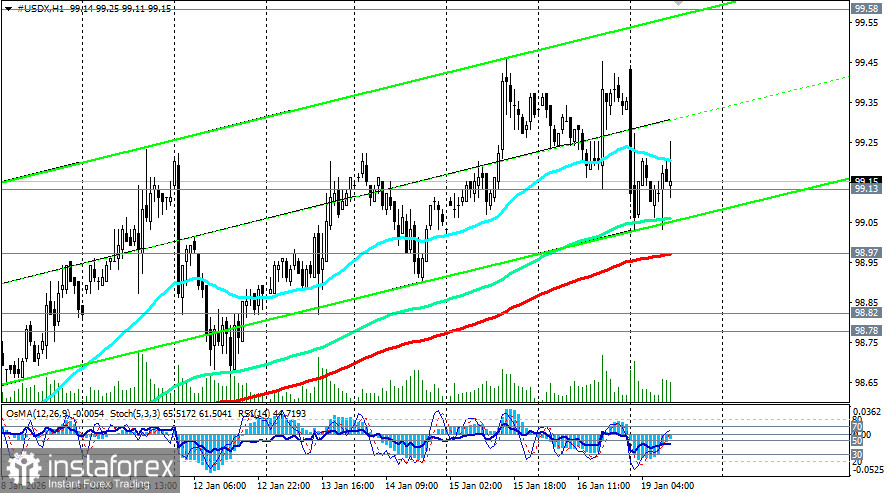
Escalation scenario (high volatility). The announcement of EU counter?tariffs and the start of real trade actions would lead to a period of extreme uncertainty. The dollar would swing sharply in a wide range, reacting alternately to safe?haven flows and to data on negative impacts to the US economy.
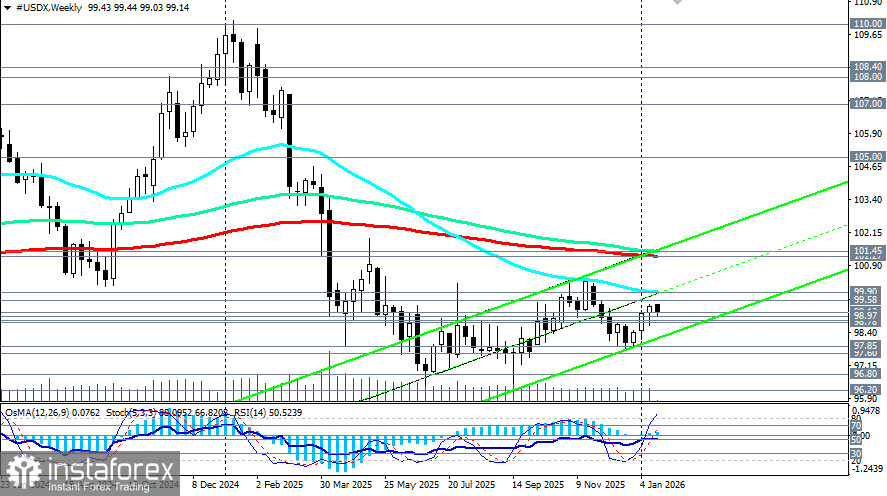
The current structure indicates weakening dollar momentum, but so far without confirmed trend reversal.
Conclusion
The US dollar stands at a crossroads, influenced by political and geo?economic factors that have temporarily pushed macro data into the background. Tariff policy, relations with the EU, and uncertainty around future Fed leadership create a complex and contradictory backdrop.
The threat of a US-Europe trade war creates the paradoxical situation in which the currency of the initiating country may suffer from its consequences.
Key factors to watch this week:
In the near term, the risk balance is tilted toward further moderate dollar weakening until signs of detente in transatlantic relations appear or a clearly dollar?supportive Fed chair candidate is appointed. In other words, the dollar's medium-term position will depend on the US ability to stabilize foreign relations and sustain confidence in monetary policy.
Investors should prepare for a period of heightened volatility and politically driven moves in the FX market.


