
See also


 25.05.2026 06:29 AM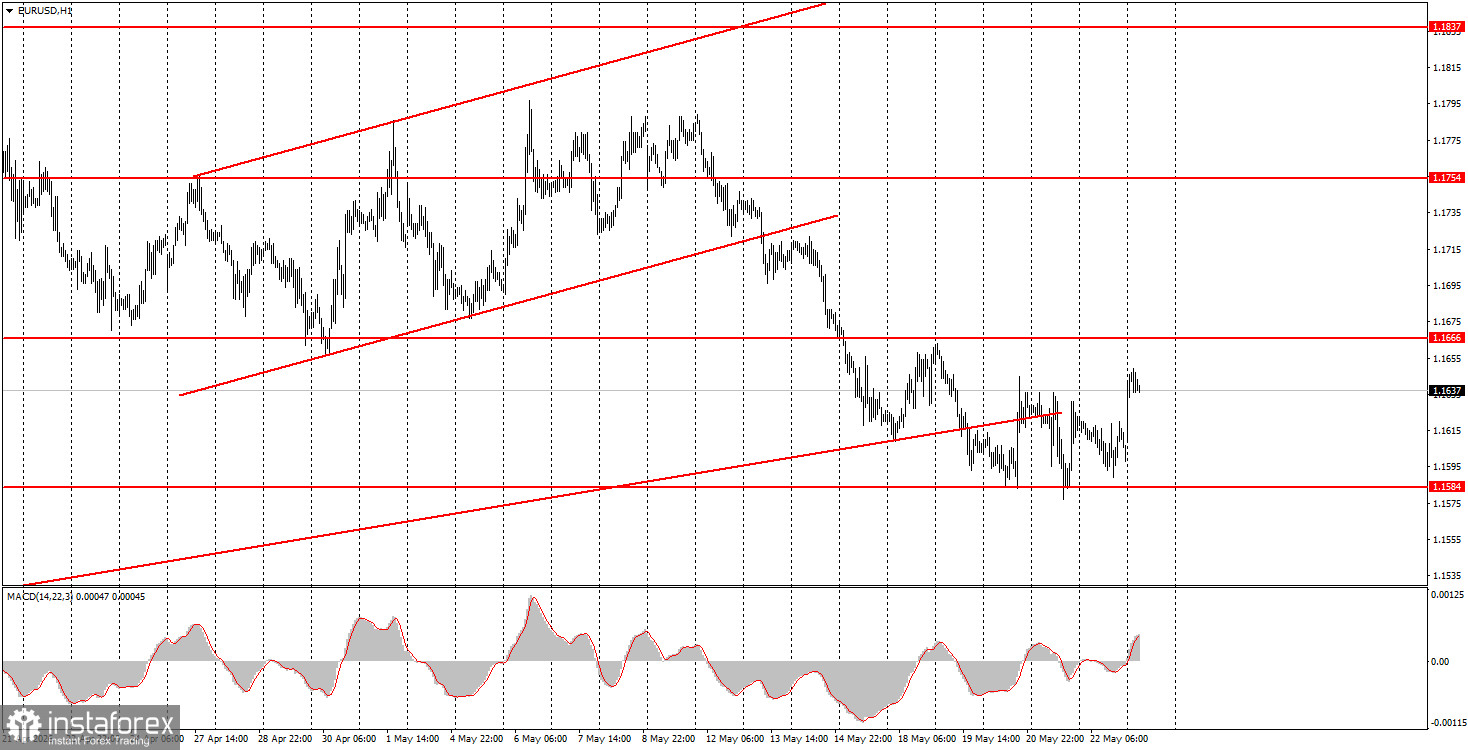
The EUR/USD currency pair traded predominantly sideways on Friday with low volatility. There were no significant macroeconomic reports or fundamental events in either the European Union or the U.S., and even geopolitical news was absent (excluding various rumors and unverified information). As has often been the case in recent weeks, the most interesting developments occurred over the weekend. Donald Trump announced that the memorandum of understanding with Iran is nearly 100% agreed upon and implies the reopening of the Strait of Hormuz. The memorandum will give the parties another 30 days to discuss a comprehensive peace agreement, and both sides have agreed to extend the ceasefire for 60 days. Unfortunately, Tehran has not yet confirmed this information, but the market believes the U.S. president will do so once again. Therefore, at the market opening on Monday, we saw a sharp spike in the pair – demand for the safe dollar decreased at the first convenient opportunity. It seems that this week will once again depend on geopolitics. If Trump's statements are confirmed, the dollar will continue to decline.
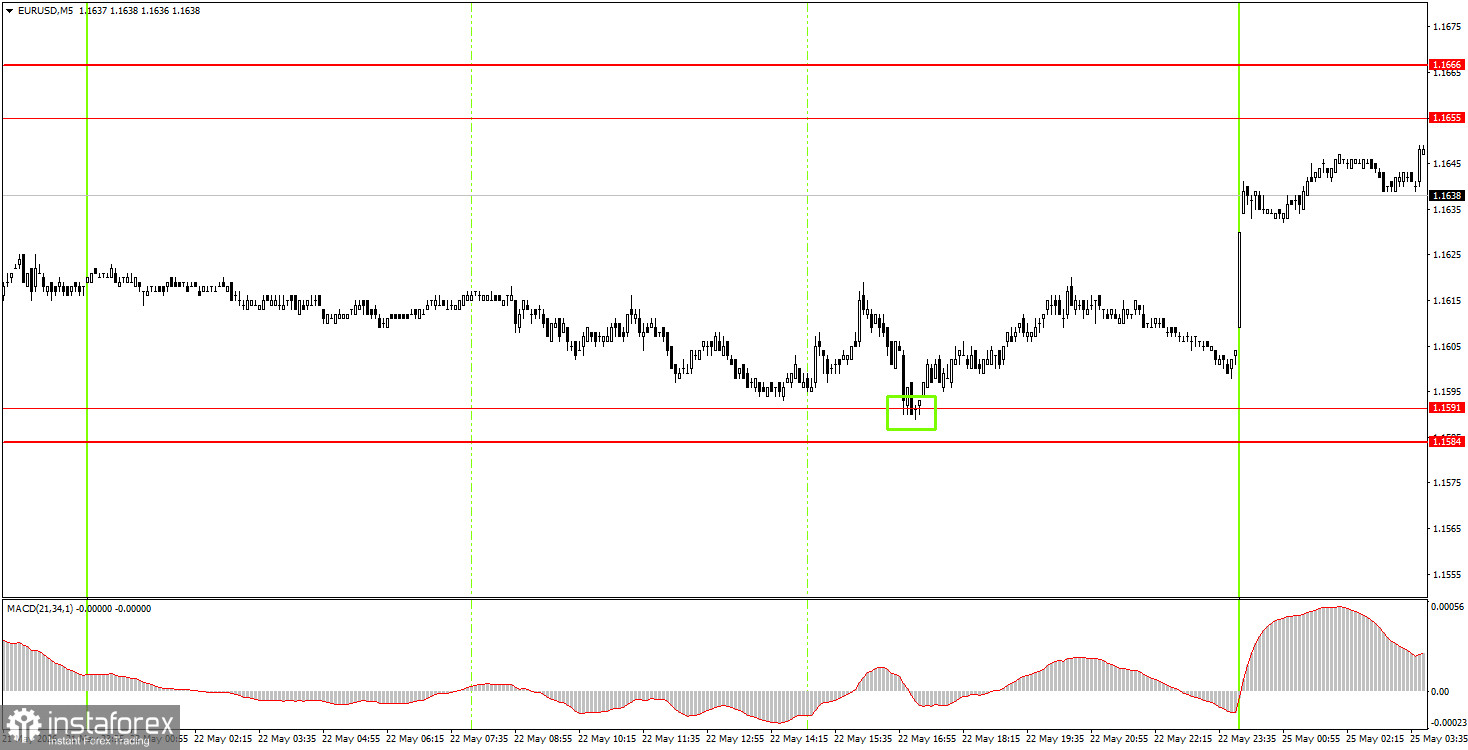
On the 5-minute timeframe, one trading signal was generated on Friday. During the U.S. trading session, the pair rebounded from the 1.1584-1.1591 area, allowing novice traders to open long positions. By the end of the day, the price rose by 15-20 pips, which traders could easily pocket. We would not recommend carrying over trades to Monday (despite the significant growth).
On the hourly timeframe, the euro has been correcting for a whole month. The resurgence of the U.S. currency came about as the conflict in the Middle East was on the brink of escalation last week, but we still do not expect prolonged growth of the U.S. dollar. The market continues to largely ignore the fundamentals and macroeconomics, while geopolitics swings the EUR/USD pair up and down.
On Monday, novice traders may consider opening short positions with a target of 1.1584-1.1591 if the price bounces from the 1.1655-1.1666 area. New long positions can be considered if the price consolidates above the 1.1655-1.1666 area with a target of 1.1745-1.1754.
On the 5-minute timeframe, levels to consider include 1.1354-1.1363, 1.1413, 1.1455-1.1474, 1.1527-1.1531, 1.1584-1.1591, 1.1655-1.1666, 1.1745-1.1754, 1.1830-1.1837, and 1.1899-1.1908. No major events or reports are scheduled in the European Union or the U.S. on Monday; however, the market will be awaiting new geopolitical information and confirmations of Trump's weekend statements.
Price levels (areas) of support and resistance – levels that are targets when opening purchases or sales, or sources of signals.
Red lines – channels or trend lines that display the current trend and indicate which direction is preferable to trade now.
MACD indicator (14, 22, 3) – histogram and signal line – a supporting indicator that can also be used as a source of signals.
Important speeches and reports (contained in the news calendar) can significantly influence the movement of the currency pair. Therefore, during their release, trading should be done as cautiously as possible, or one should exit the market to avoid a sharp price reversal against the preceding movement.
Beginners trading in the Forex market should remember that not every trade can be profitable. Developing a clear strategy and effective money management are key to long-term trading success.


