
Veja também


 18.09.2026 01:28 PM
Speed matters. Unlike the Federal Reserve, which surprised investors with its intention to do more than they had expected, the Bank of Japan disappointed them. It raised the overnight rate from 1% to 1.25% for the third time in the past 10 months, marking the most aggressive monetary policy tightening cycle since 1990. However, this outcome was expected, while the presence of two dissenting members was not. This put pressure on the yen, and USD/JPY surged to its highest level since early September.
Central Bank Rate Dynamics
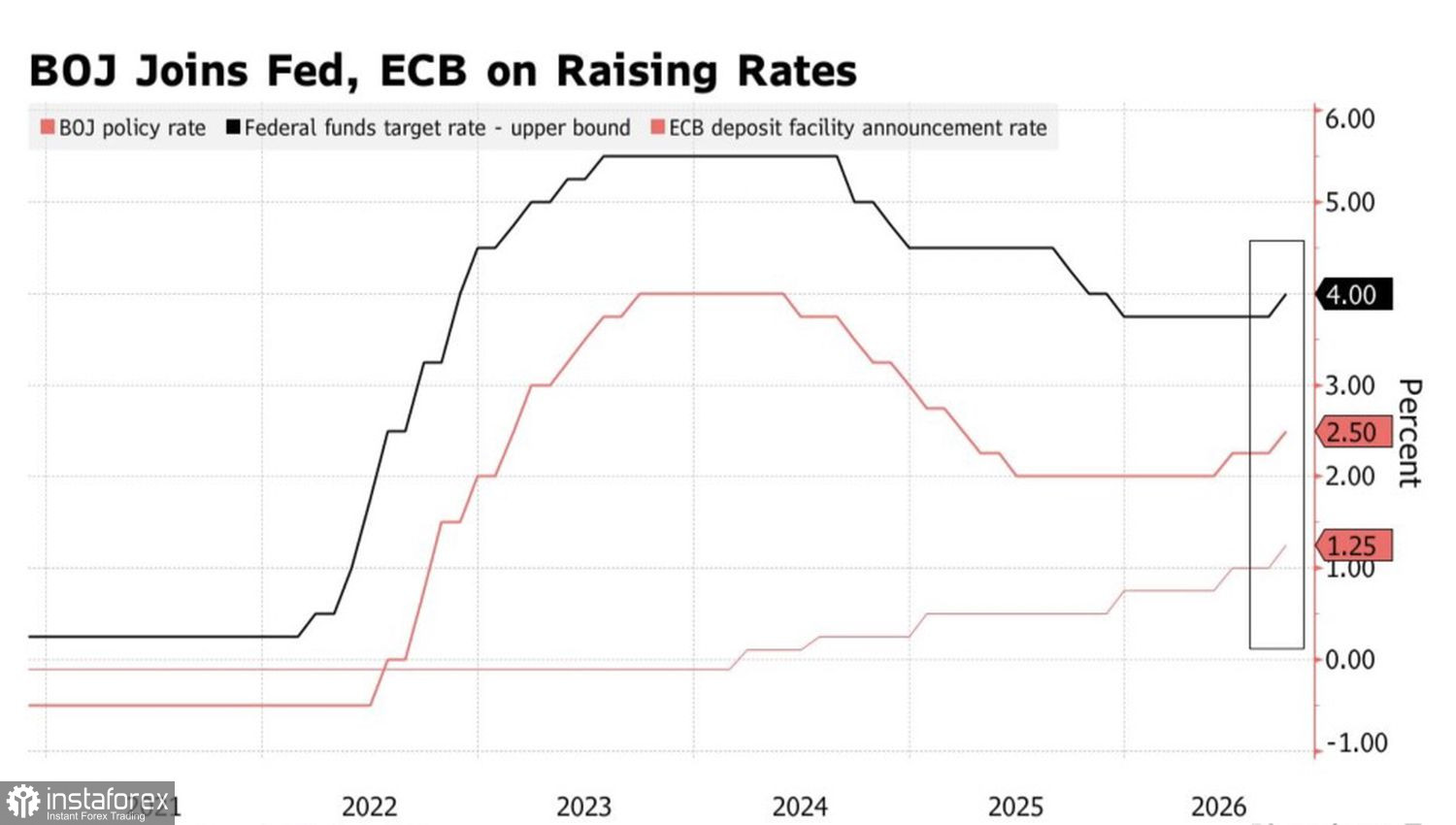
Interestingly, ahead of the Policy Board meeting, Wells Fargo and Citigroup warned that the yen would weaken sharply because market expectations for aggressive monetary policy tightening by the BoJ were excessive. Despite the increase in the overnight rate and Kazuo Ueda's statement that another rate hike should not be ruled out at any subsequent meeting, USD/JPY moved sharply higher.
Toichiro Asada and Ayano Sato voted against the Bank of Japan's decision to continue its monetary tightening cycle. Both were appointed to their positions by Sanae Takaichi. The market interpreted their dissent as a sign that the prime minister was unwilling to support monetary policy tightening. If these "doves" continue to hinder the BoJ, the previous pace of rate hikes, once every six months, could return, allowing USD/JPY to continue its rally.
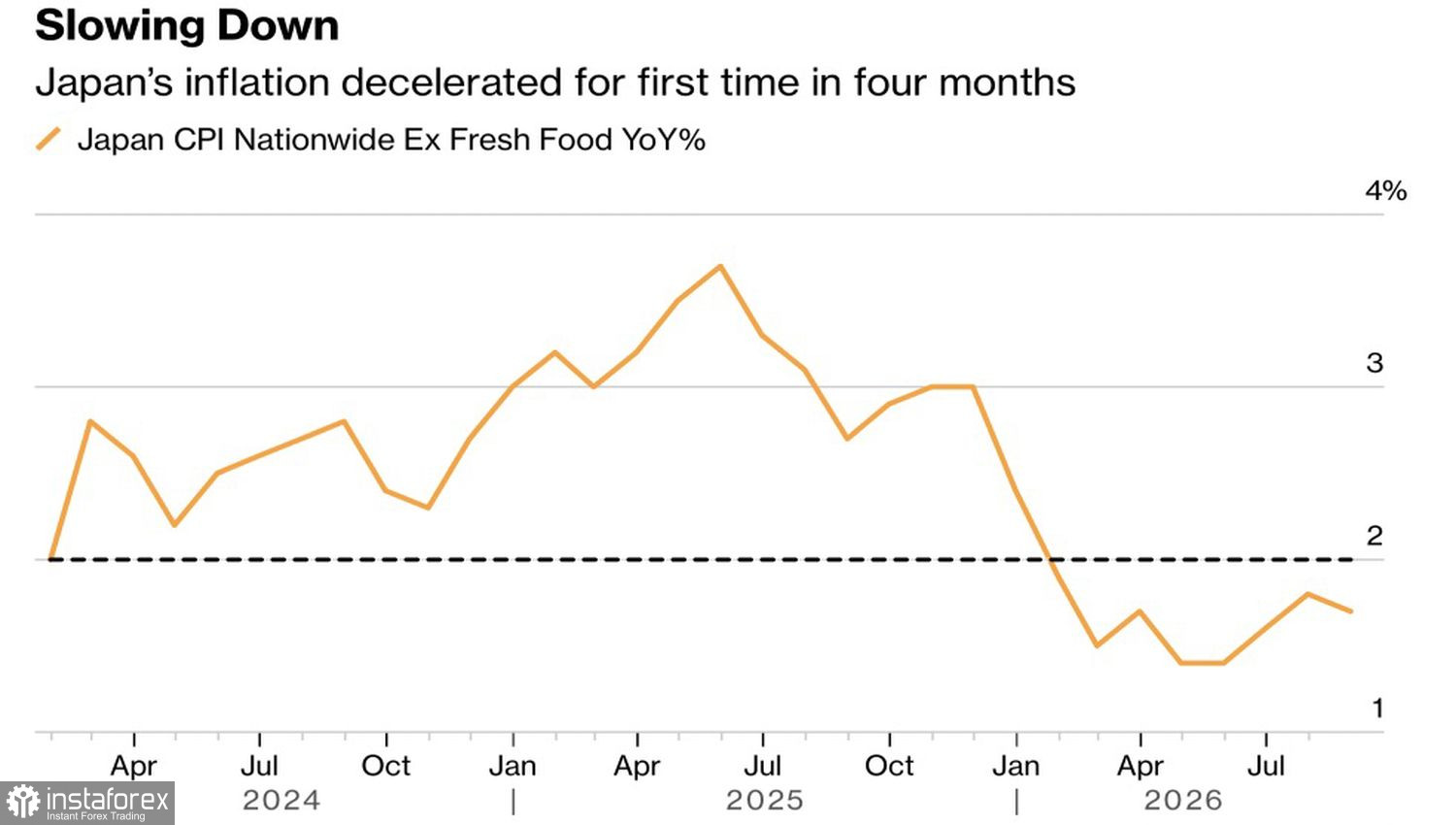
The unexpected slowdown in Japanese consumer price growth from 1.9% to 1.8% in August, the first decline in four months, also provides little reason for yen supporters to be optimistic. Although Kazuo Ueda says that inflation risks exceeding the 2% target, meaning that the BoJ should remain vigilant and avoid delaying an aggressive rate hike, the slowdown in CPI growth is a strong argument for gradual monetary policy tightening. This puts pressure on USD/JPY bears.
Japan's Inflation Dynamics
The higher the pair rises, the greater the risk of renewed verbal and currency interventions. It also increases the likelihood of dissatisfaction from the United States, where Scott Bessent justifies intervention concerns by pointing to the risk of Treasury bond sales by Japan, the largest holder.
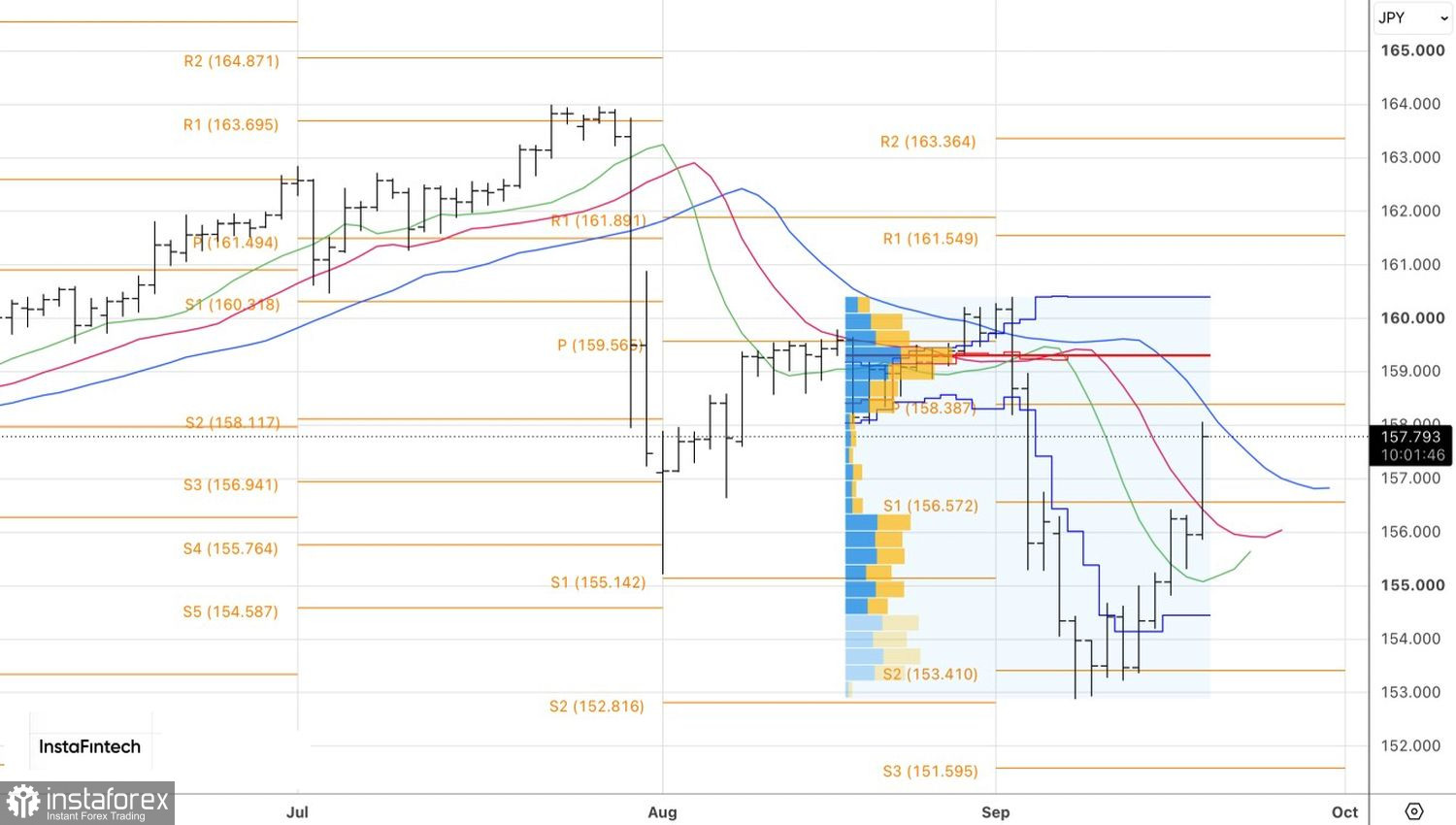
Thus, the USD/JPY rally is the result of a combination of a more aggressively inflation-focused Federal Reserve and disappointment with the Bank of Japan's actions and rhetoric. If its monetary tightening cycle proceeds more slowly than markets expected, the wide interest rate differential and the use of the yen as a funding currency in carry trade operations will allow the pair under analysis to continue moving upward, regardless of how much the Japanese government and central bank would prefer otherwise.
Technically, the daily USD/JPY chart shows a breakout of two of the three dynamic resistance levels represented by moving averages. This allows traders to consider buying the pair while its price remains above the support provided by the pivot level at 156.95.


